

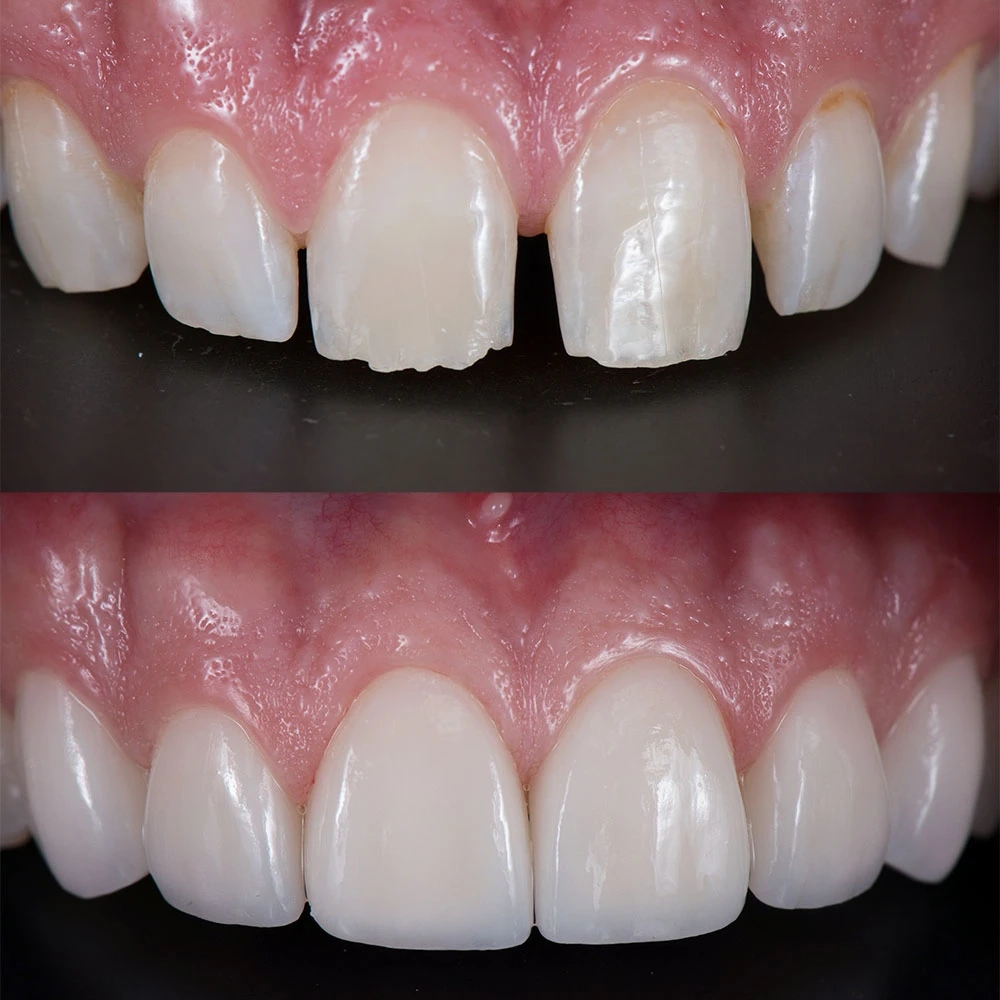
A beautiful smile does not always require crowns or veneers. In many cases, small imperfections such as chips, gaps, discolorations, or minor misalignments can be corrected with a conservative and highly aesthetic treatment known as Aesthetic Filling (Composite Bonding).

At TokayDent, we offer advanced composite bonding procedures designed to restore tooth shape, improve color, and enhance smile harmony — all while preserving maximum natural tooth structure.

Aesthetic bonding is one of the most preferred treatments in modern cosmetic dentistry due to its:

  • Minimally invasive approach

  • Immediate results

  • Affordable alternative to veneers

  • Natural-looking outcome

What Is Aesthetic Filling (Bonding)?

Aesthetic filling, also known as composite bonding, is a cosmetic dental procedure in which a tooth-colored resin material is applied and shaped directly onto the tooth surface to correct imperfections.

Unlike traditional metal fillings, bonding materials:

  • Match natural tooth color

  • Blend seamlessly with enamel

  • Require minimal or no tooth reduction

  • Are completed in a single visit

At TokayDent, we use high-quality nanohybrid composite materials to achieve optimal aesthetics and durability.


When Is Composite Bonding Recommended?

Aesthetic bonding is ideal for correcting:

  • Chipped teeth

  • Small cracks

  • Gaps between teeth (diastema)

  • Slightly uneven teeth

  • Minor misalignment

  • Discoloration

  • Small cavities in visible areas

  • Worn edges

It is particularly suitable for patients who want a quick and conservative smile improvement without aggressive procedures.


Who Is a Suitable Candidate for Aesthetic Filling?

Composite bonding is recommended for patients who:

  • Have healthy gums

  • Have minor cosmetic concerns

  • Do not require major structural correction

  • Prefer minimally invasive treatment

  • Want immediate aesthetic improvement

Bonding may not be ideal for:

  • Severe crowding

  • Large fractures

  • Heavy bite pressure cases

  • Severe bruxism

A full evaluation at TokayDent ensures the right treatment decision.


The Aesthetic Bonding Procedure at TokayDent

Step 1: Consultation and Smile Analysis

  • Digital photography

  • Shade selection

  • Smile design planning

  • Tooth proportion analysis

Step 2: Surface Preparation

  • Light enamel roughening (if needed)

  • Application of bonding agent

Step 3: Composite Application

  • Layer-by-layer resin placement

  • Sculpting and shaping

  • Natural contour creation

Step 4: Light Curing

  • Special curing light hardens the material

Step 5: Polishing and Finishing

  • Surface smoothing

  • Shine enhancement

  • Final bite check

The entire process is usually completed in 30–90 minutes per tooth.


Advantages of Aesthetic Filling (Bonding)

  • Minimally invasive

  • No significant enamel removal

  • Painless procedure

  • Immediate results

  • Cost-effective compared to veneers

  • Repairable if damaged

  • Natural color matching

  • Single-session treatment

At TokayDent, we carefully sculpt each tooth to maintain symmetry and harmony.


Disadvantages of Composite Bonding

  • Less durable than porcelain veneers

  • May stain over time

  • Slightly lower longevity

  • Not ideal for large restorations

However, proper maintenance significantly extends its lifespan.


How Long Does Composite Bonding Last?

Composite bonding typically lasts:

  • 5–7 years on average

  • Longer with excellent oral hygiene

  • Shorter in smokers or heavy coffee drinkers

Maintenance polishing may be required periodically.


Does Bonding Look Natural?

Yes — when performed by experienced cosmetic dentists.

At TokayDent, we use:

  • Multi-layer composite technique

  • Natural translucency layering

  • Shade blending

  • Surface texture recreation

This ensures a seamless result that mimics natural enamel.


Composite Bonding vs Laminate Veneers

Feature Composite Bonding Laminate Veneers
Invasiveness Very Low Low
Longevity 5–7 Years 10–15 Years
Cost Lower Higher
Same-Day Result Yes No (lab required)
Repairability Easy More complex

Bonding is ideal for small aesthetic corrections, while veneers are better for complete smile transformations.

Composite Bonding vs Fillings

Although bonding uses filling material, aesthetic bonding differs from regular fillings because:

  • It focuses on cosmetic enhancement

  • It involves artistic sculpting

  • It improves tooth shape and symmetry

  • It is used on visible front teeth


Is Aesthetic Bonding Painful?

No. In most cases:

  • No anesthesia is needed

  • No drilling is required

  • No discomfort occurs

It is one of the most comfortable cosmetic procedures.


Aftercare for Composite Bonding

To maintain results:

  • Avoid biting hard objects

  • Reduce staining foods

  • Brush twice daily

  • Floss regularly

  • Avoid nail biting

  • Schedule regular dental check-ups

Professional polishing at TokayDent helps maintain shine.


Can Bonding Be Whitened?

No. Composite resin does not respond to whitening agents. If whitening is planned, it should be done before bonding.

At TokayDent, we coordinate treatments accordingly.


Is Composite Bonding Reversible?

Yes. Since minimal enamel reduction is required, the procedure is largely reversible.

This makes it one of the most conservative aesthetic dentistry treatments.


Aesthetic Bonding and Smile Design

Composite bonding is often used in:

  • Smile makeover

  • Diastema closure

  • Edge lengthening

  • Minor orthodontic camouflage

  • Post-orthodontic finishing

It can also be combined with:

  • Teeth whitening

  • Pink aesthetics

  • Veneers


Why Choose TokayDent for Aesthetic Bonding in Turkey?

  • Advanced cosmetic dentistry expertise

  • High-quality composite materials

  • Digital smile planning

  • Artistic tooth sculpting

  • Minimal invasive philosophy

  • International patient care

At TokayDent, we believe small changes can make a big difference.


Frequently Asked Questions (FAQ)

1. Is composite bonding permanent?

It is long-lasting but may require maintenance after several years.

2. Does bonding damage teeth?

No, it preserves natural tooth structure.

3. How long does the procedure take?

Usually 30–90 minutes per tooth.

4. Can bonding close gaps?

Yes, it is commonly used for diastema closure.

5. Does bonding stain?

It can stain over time, especially with smoking or coffee.

6. Is anesthesia required?

Usually no.

7. Can bonding fix crooked teeth?

Minor misalignments can be camouflaged.

8. How durable is bonding?

With proper care, 5–7 years or more.

9. Can it chip?

Yes, under excessive pressure.

10. Why choose TokayDent?

Because we combine cosmetic artistry and minimally invasive techniques for natural-looking smile enhancement.

Do you want to have an aesthetic smile?
For a online free consultation